

Technical Guidance
Structural movement is a normal part of modern building performance. As buildings respond to loading, temperature changes and long-term settlement, movement can occur within floors, frames and structural elements.
Partition systems must be designed to accommodate this movement without cracking, distortion or failure. Deflection head systems play a key role in managing this within internal wall construction.
Several factors can contribute to movement within a building structure:
These movements may be small, but they can place significant stress on rigid partition systems if not properly accommodated.
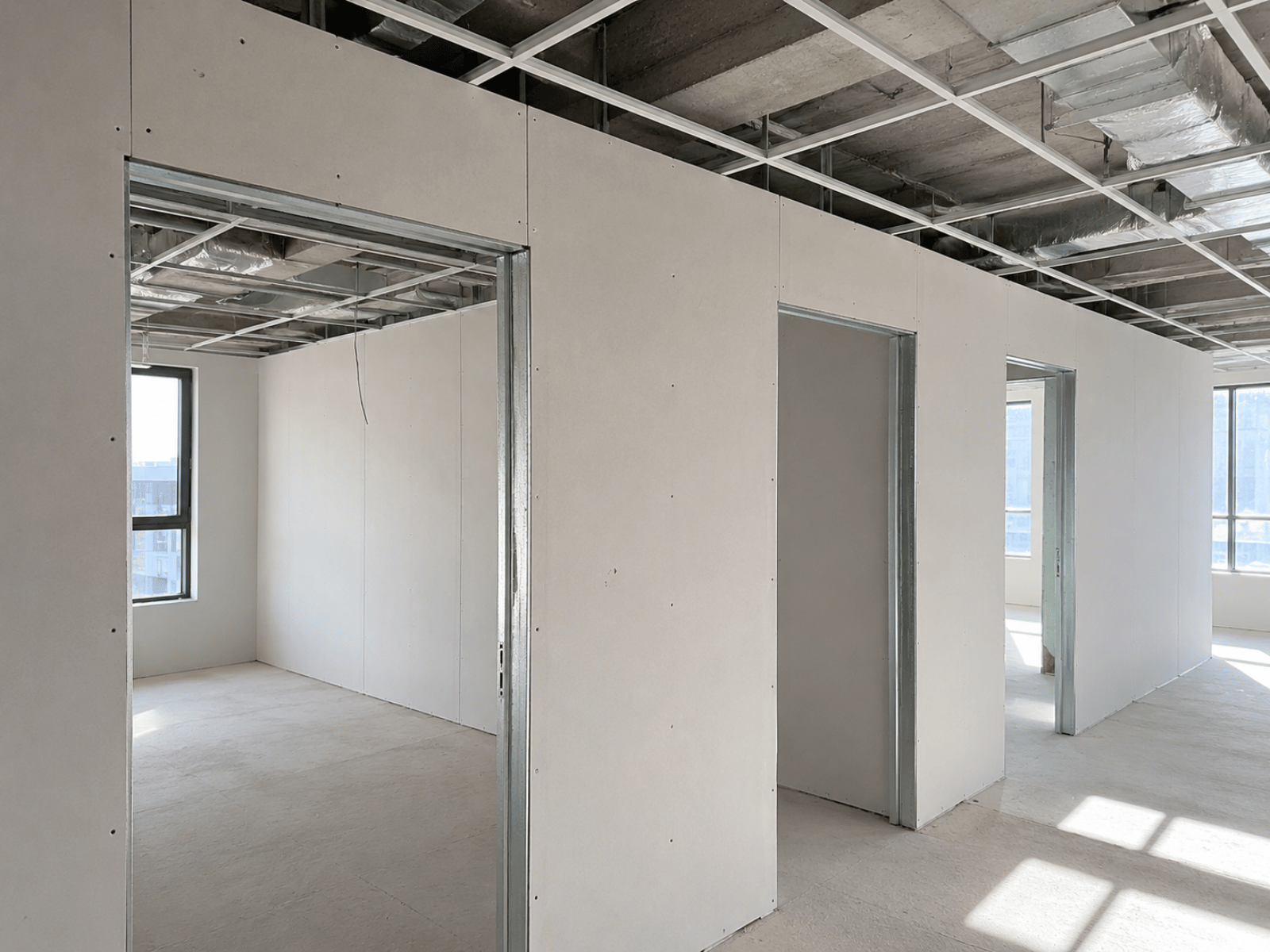
Internal partitions are often non-loadbearing elements installed beneath structural slabs or steelwork.
If the structure above moves downward or flexes, the partition can become compressed. Without movement allowance, this may result in:
Movement allowance helps prevent these issues.
Deflection head systems create a controlled movement zone at the top of the partition.
This allows:
The amount of required deflection allowance will depend on the building design and structural engineer’s calculations.
Where partitions form part of a fire-rated system, movement accommodation must not compromise compartmentation.
This means:
Fire performance should always be considered alongside movement requirements.
Correct installation is critical to ensuring movement systems function properly.
Important considerations include:
Improper installation can restrict movement and reduce overall system performance.
Structural movement is an essential consideration within modern partition design. Deflection head systems help accommodate this movement while maintaining partition integrity, appearance and performance.
Correct specification and installation are key to ensuring long-term reliability within commercial and residential buildings.
FGF manufactures deflection head strips and fabricated partition components, supported by technical guidance and nationwide delivery.
Talk to our team about your project requirements.