

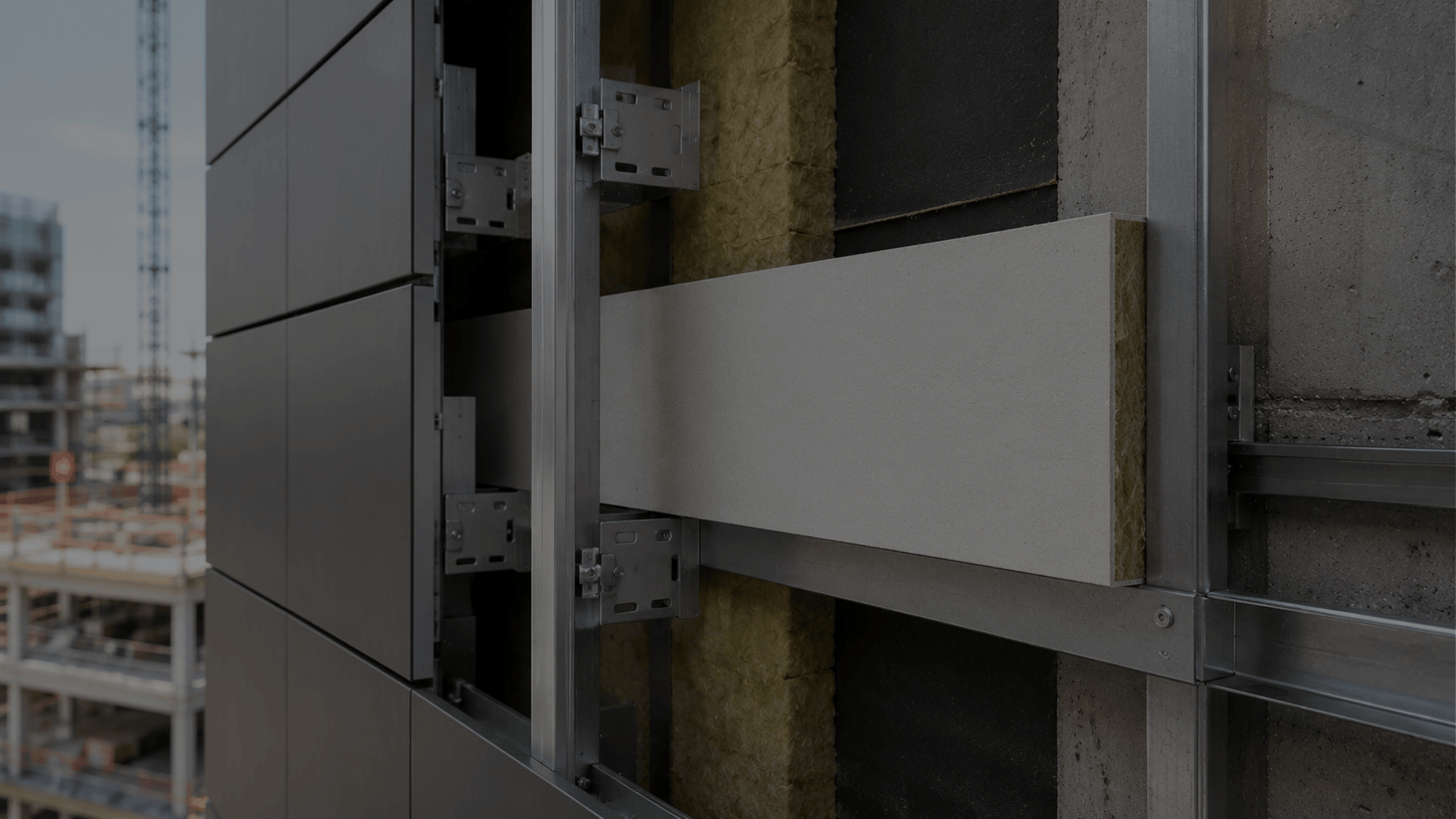
Cavity barriers are an essential component of passive fire protection, helping to restrict the unseen spread of fire and smoke through concealed spaces within a building.
Installed within wall cavities, roof voids, floor voids and ventilated façade systems, cavity barriers help maintain compartmentation by closing concealed openings where fire could otherwise spread rapidly.
As modern construction increasingly incorporates ventilated façades, lightweight construction methods and complex service voids, correctly specified cavity barriers have become a fundamental part of achieving compliant and effective passive fire protection.
A cavity barrier is a fire-resistant product installed within concealed cavities to restrict the passage of fire and smoke.
Unlike fire stopping products, which seal service penetrations through fire-rated walls and floors, cavity barriers are specifically designed to close hidden voids created during the construction of buildings.
Typical locations include:
Their purpose is to divide large concealed spaces into smaller compartments, reducing the potential for rapid fire spread.
Fire does not only spread through occupied spaces.
Concealed cavities within buildings can allow flames, smoke and hot gases to travel unnoticed, potentially bypassing fire-resistant walls and floors.
Correctly specified cavity barriers help to:
Without appropriate cavity barriers, concealed voids can become one of the fastest routes for fire to spread throughout a building.
Cavity barriers are commonly installed in several areas of a building.
Ventilated façade systems require cavity barriers to help prevent fire spreading behind external cladding while allowing normal ventilation during everyday use.
Installed within cavity wall construction to divide concealed voids into manageable fire compartments.
Helping restrict the movement of fire through concealed roof spaces.
Protecting concealed service zones above suspended ceilings and below raised floors.
Maintaining fire compartmentation where concealed cavities intersect compartment lines.
Several types of cavity barrier are available depending on the application.
These include:
The correct product depends on the building design, ventilation requirements and the tested construction.
Cavity barriers should never be viewed as standalone products.
Their performance depends on being specified and installed as part of a tested passive fire protection system.
Factors that influence product selection include:
Always refer to the manufacturer's tested details and installation guidance.
FGF supplies cavity barriers from leading passive fire protection manufacturers together with technical support for projects throughout the UK.
Our team can assist with:
By working closely with leading manufacturers, FGF helps contractors identify the most appropriate cavity barrier systems for their project.
Whether you're specifying cavity barriers for a ventilated rainscreen façade, a commercial building or a residential development, FGF can provide technical guidance and nationwide supply.
Contact our team to discuss your project requirements.